Saturday, June 18, 2016

15 Cheap Car Hacks To Make Your Life Easier

There’s a Tony Stark in each one of us! Well, over time and with experience, we all have come out with some easy solutions to our daily life problems. More of hacks, these solutions were never meant to be but they do have made our life easier. For car owners, we have these 15 unique hacks that might answer long standing problems and queries. Check them out!


1. Toothpaste to clean headlights 


Cleaning headlights has always been an issue, especially during the rainy season and after a bit of off-roading. Using a big brush, you can rub the toothpaste all over the plastic casing to remove the dust and the entire foggy glaze. This should make things pretty clean. 


2. Shoe for a cup holder 


Not all car owners are privileged to have a cup holder and even if they come, most are pretty small. If you are in the habit of having a big cuppa coffee or coke, you are in trouble. The normal cup holders in cars won’t hold more than 32 oz drinks. Well, for a deeper alternative, you can use a shoe! Deeper than the car’s cup holder, shoes will provide a heavier base and will be perfect for a longer drink! 


3. Staple remover to maneuver the key ring 


Adding extra keys to a car’s key ring can be tough. However, you can use a staple remover to make the process easier. 


4. Seat warmer for your pizza 


Have a pizza onboard but worried that it might cool down and you might have to put it in the oven again? Well, why not use your car’s seat warmer instead? While it won’t be able to keep your food steaming, it will definitely allow you to have a warm pizza when you get home. 


5. Nail polish to paint scratches 


A scratch on your car can be frustrating. Paining the whole car anew is again an expensive process. If the scratch isn’t too much, you might actually manage with the closest nail polish! Try it. 


6. Cereal container for trash can 
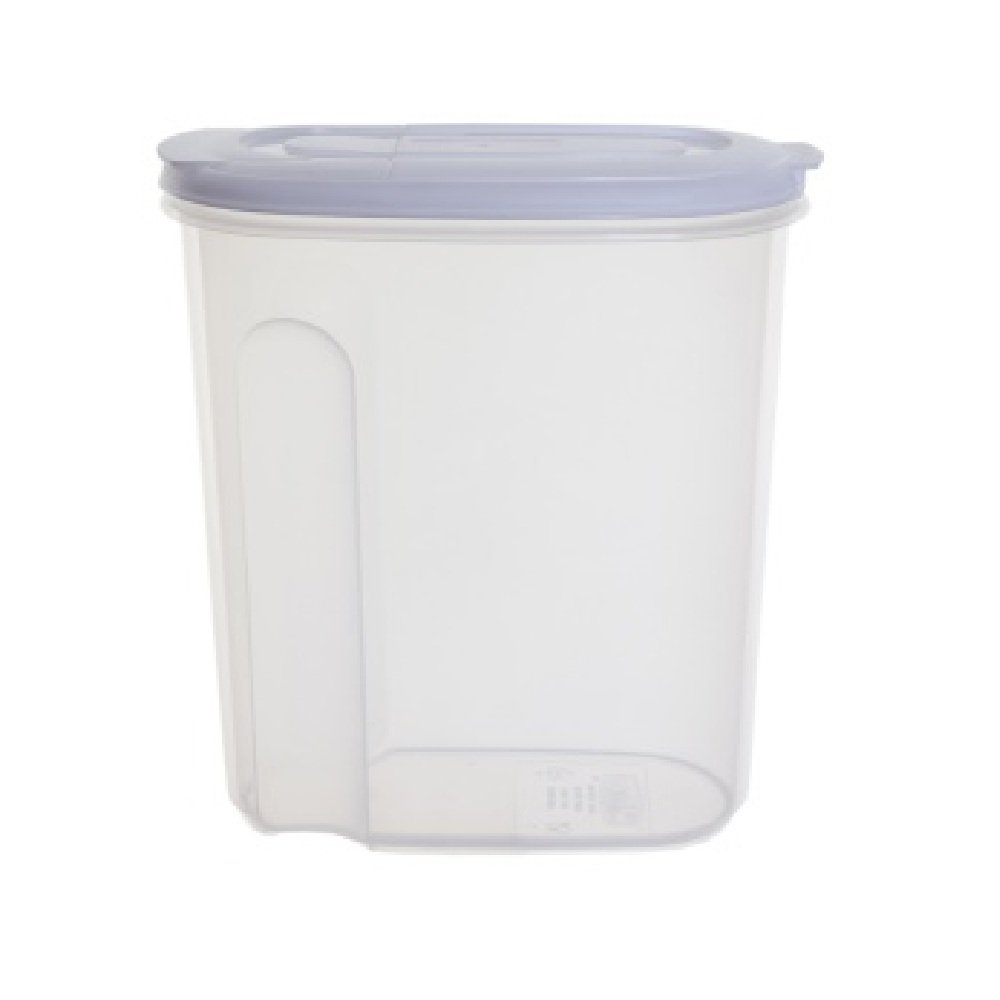


Worried about where to put the empty burger packets in your car? Well, don’t dump them under the seat. You might use an empty cereal container for a temporary trash can. 


7. Tinted plastic for shade 


Too much of sun? Try attaching tinted plastic sheets to the windshield to reduce the glow. The sheets automatically stick on the shield so there’s no messing around with cello tapes. 


8. Mesh bungie for overhead storage 


A lot of extra handy storage can be achieved by using a mesh bungie net on top of your head. At least, you can put in your books and jackets in there! 


9. East facing parking 


Having the first rays of the sun warm up your car in the morning will save you from the trouble of defrosting. 


10. Plunger for dents 


Plungers can be used successfully to clear out any small dent in the car body.


11. Hand sanitizers to de-ice keyholes 


For people in cooler climates, a hand sanitizer can be more about cleaning your hands! 


12. Boosting your car remote using your head! 


Now, this is really interesting. By putting up the remote against your chin, you can actually boost the range of the remote! 


13. Toothpaste for scuffs 


Scuffs, like headlight fog, can be well taken care of by toothpaste. 


14. Wet newspaper to peel off stickers 


We all have faced the problem of registration stickers becoming a part of your windshield. Well, you can wet a newspaper in warm water and place it against. After a while, everything will simply fall off in your palms! 


15. Shoe organizer in the backseat 


Shoe organizers placed in the back of the driver’s seat can take care of a lot of mess. 

Hope you have liked our hacks. If you are doing something else, please let us know!
 

Share

Friday, June 10, 2016

Top 10 Reasons Why Drivers Crash Their Cars

Everyone likes to think they’re a good driver and that they’re not going to be involved in a crash. But according to the Association of British Insurers (ABI), every year around three million people claim on their car insurance, sometimes for theft or vandalism, but usually because of some kind of collision.

Here we are sharing a list of the 10 most common reasons why car crashes happen in the UK.


Share

Thursday, May 26, 2016

5 Things to Consider Before Investing In LED Light Bulbs

LED Headlights have caught up rage in four wheelers as well as two wheelers for being absolutely cool, bright and low energy consuming.  Using the same logic, LED lights have found place in homes and offices in a number of fixtures. Array of LED bulbs are available in the stores, shopping for these lights is somewhat different than the regular incandescent bulbs. It therefore demands some home work to get the right light at the right price, of the required brightness and also required colour. 

Here are 5 essential things which must be kept in mind before investing in these valuable lights.


1. Don't Ask For Watts

Lumens are the correct measurement indicator for LED Bulbs, unlike watts, which we are accustomed to. Being energy saving, the watts which are energy measurement indicators barely play any importance here. In comparison to incandescent bulbs which use 150 watts of energy to produce 2600 lumens of brightness, the LED'S use a miniscule 25-28 watts of energy. The brightness derived from the little diodes and circuits of the LED measured in Lumens are basic differentiators to compare the different LED Lights. Hence, when seeking an LED in a store, one must not ask for watts and look more wise and informed. Installing LED'S can definitely lower the light bills.


2. Look For The Best Colour And Shape Choices

The multiple colours available in LED bulbs give a huge range of choices. From dark hues like purple, red, there are popular LED versions which throw yellow and white hues like those of the ordinary incandescent bulbs. Hence, when looking for lighting homes, the warm whites closer to yellowish shade or bright whites closer to whiter shades can be the best choices. Certain jargons like Kelvin's must not boggle the shoppers of LED Lights. These are just measurements for the colour temperature usually common even in incandescent. A range of 2700-3500k is commonly suggestible for homes. 

Omni- directional lights instead of just one direction lights are the latest advancements in LED Light bulbs. Hence, look out for the attractive and utility based shapes accordingly.  

 
3. Don't Be Afraid Of Cost Concerns

The upfront cost of LED bulbs is definitely higher than incandescent bulbs. However, the energy efficient bulbs pay off over a long run with a longer shelf life, less heat and lower bills. The latest technology LED Lights can also be controlled with the help of Smartphone. The investment will be even more worthwhile when the plan is to change all the incandescent bulbs with these LED alternative bulbs.  


4. Check Out For Dimming Alternatives

Dimming options are warranted for further energy savings by many people. However, the LED Bulbs absolutely compatible with the traditional dimmer incandescent bulbs can be expensive. Changing the dimming switches to LED version instead can be an economical alternative. 


5. Don't Use In Enclosed Fixtures

Though popular for lower heat emission and remaining cool over the incandescent bulbs, the LED Lights can emit higher heat if used in enclosed fixtures leaving little scope for the heat to dissipate into the air from the heat sinks attached. The mechanism of remaining cool can be disturbed when used in this way. This can lead to reduction of the shelf life of the bulbs and they consequently can burn out quickly.

Share

Thursday, May 12, 2016

Make Your Car Headlights Bulbs Long Lasting [Infographic]

Headlights play a very crucial role for your safe drive in the areas where visibility is almost zero. We can’t ignore the importance of headlamps. Driving during late nights becomes critical without them. Here are some tips, shared by Auto LED Shop, which can be followed to make your car headlight bulbs long lasting.


Share

Monday, May 9, 2016

Why One Should Upgrade To Xenon Lights?

Till even a year ago, halogens had been the common choice when it came to high intensity lighting. However, technology has fast upgraded and halogens are fast getting upgraded to a newer and “greener” alternative. Called the “Xenon” lighting, these bulbs are able to produce a brighter beam while consuming lesser amount of energy. Xenon lights also has a top advantage of being highly durable over halogens that had to be replaced every often.

Since most readers here won’t be chemists, let’s try to understand Xenon lighting technology in simpler and useful terms as opposed to statements from the Periodic Table! What we need to know is that both halogen and Xenon offer a number of benefits but to be used in a certain application; you need to know the exact advantages and disadvantages of each.


A Brief About How Xenon Bulbs Work 


Both halogen and xenon are incandescent form of lighting. Both use a thin tungsten wire/filament covered in a glass bulb to convert electric energy into heat energy and subsequently into light. The only difference here is that while halogen bulbs use halogen gas inside the glass bulb, Xenon bulbs have xenon to offer the same functionality. 

Now, adding an inert gas like halogen or xenon slows down the oxidizing process of the tungsten filament as it is heated continuously. The more the amount of time the filament lasts (doesn’t burn out) the more is the longevity of the bulb.

Now let’s understand why xenon is a more stable alternative to halogen gases and more specifically, why you should be upgrading to xenon bulbs.


The chemical reason 

Chemically, halogen gases like fluorine, chlorine, iodine or bromine are all monovalent elements, meaning that they could easily form a negative ion. So in halogen bulbs, the tungsten will gradually wear down its atoms and reform into tungsten halide, which gets re-deposited in the filament, thus keeping the filament intact for long. 

Xenon too works in the same way, but being a noble gas, it doesn’t produce negative ion and is highly stable. Practical implications point out to negative color changes (that’s why halogen bulbs get blackened over time) and give out a brighter white light.


In terms of efficiency 

For a halogen lamp, the average longevity is around 2,000 hours, 2 times longer than the regular incandescent bulbs. However, xenon light bulbs can last longer for as much as 10,000 hours, without a drop in the quality of brightness. This is 5 times the life of a halogen bulb. Further, xenon required less amount of electricity to be stimulated and thus you save a lot on energy consumption. 


In terms of sensitivity 

If you have been a user, you already know how hot it can get with a halogen bulb. The heat makes halogen bulbs unsuited to several applications like sensitive displays or artwork. Halogen bulbs also emit UV radiation, a potential hazard to your health. Touching a halogen lamp with bare hand or even getting closer is impossible and in case something cooler gets in sudden contact with the bulb, the glass will immediately burst. 

With xenon headlight bulbs, the heat production is minimal and compared to halogen, the UV radiation too is very less. This makes xenon bulbs perfect for application in high traffic areas and minimize the chance of a panic or an accident. 

The only thing “not in favor” of xenon bulbs is its price. Being a rare gas, xenon bulbs are more expensive than halogen but if you again see at the long term implication and count in energy saving, the investment is profitable. 

Share

Thursday, April 7, 2016

Top 10 Tips to Improve Night Driving [Infographic]

Driving in dark can be risky if you are not following the right safety practices. Check your car headlights and climate condition properly before going out in dark. Here we have an infographic from Auto LED Shop which revolves around top 10 tips to improve night driving.


Share

Wednesday, March 9, 2016

5 Tips to Improve Driving In Dark

Travelling by car in darkness can be risky if you don’t follow proper safety guidelines. Here are 5 tips you should always keep in mind while driving in dark:

1. Stop, Sip, Sleep

A survey conducted by the Road Safety Authority revealed that over 1 in 10 drivers have really fallen asleep at the wheel. Almost 1 in 5 motorists, who admit to driving after any amount of alcohol, have fallen asleep at the wheel. RSA advice to “stop, sip, sleep” for those that feel sleepy while driving as tiredness related accidents can result in serious injury. They advice motorists to stop the car in a safe place then sip a caffeine drink and sleep for 15 minutes if they feel sleepy while driving.

2. If Weather Is Not Good

Prior to setting off on a trip, it is advised to confirm if there are any troubles on your planned route.  The Road Safety Authority advises to always plan in advance, mainly when travelling in the dark.  They suggest sources such as the Department of Transport, local broadcasting stations, Met Eireann, AA Roadwatch and the Garda updates.  They suggest that there is also information on local authority websites and for updates on environment on Motorways and National roads there is information on the National Roads Authority Website that is updated on the regular basis.

3. Is Your Car Ready For Winter?

There are a many important checks that all motorists must do to get ready for driving in darker conditions.  Preferably a complete tune-up must be done in addition to normal checks.  All motorists must look for wear and tear on wiper blades and to change them if they begin to smear and keep tyre pressure at the limit suggested by the company and make sure that the tread depth is right.  The spare wheel must be in first-class state and be fully inflated. For cars that have inflation repair equipment instead of a spare wheel, the recommendation is to make sure that you be familiar with how to use it.  Motorists should make sure that all lights are functioning and spotless, as an out of order headlight is an offence and should regularly top up with anti-freeze and screen wash. 

4. Check your Night Vision

Eye care is frequently ignored by drivers but mainly for those who drive a lot or drive in dark, it is necessary to have regular eye examinations.  Some people have trouble in seeing in dark and low-light conditions and suffer from a state identified as ‘night-time blindness’.  An eye check will help to identify this.  Normally, drivers should compensate for poorer light levels by driving unhurriedly and allowing more time for the ride. Cyclists and pedestrians can be very hard to see at night and in particular during dawn and dusk, so it is necessary to have an updated eye examination.

5. Replace Your Headlights If Needed

Don’t forget to replace your old broken headlights with the new LED headlights before setting up for a journey. If your headlights are not in good working conditions then it can put you in serious troubles later.


Share

Friday, February 12, 2016

Warning Lights: What's Your Car Telling You? [Infographic]

There are several kinds of warning lights that give us messages about the various situations and these lights help us in making the right choice at the right time while driving. The infographic below, created by Auto LED Shop, revolves around different warning lights.


Share

Tuesday, February 9, 2016

Safety Lights Encourage Protection to Your Vehicle

Vehicle safety lights are visual cautioning lights furnished to the vehicle. These assist in an instance where the driver needs to communicate to other drivers on the road about the urgency of their voyage. These lights act an extra cautioning of a threat when still, or during circumstances where the police need the driver to halt for interaction.


Choosing safety lights for your vehicle

Vehicles require suitable emergency lights for safety reason. This includes headlights, flashing system, dash or grill light, and taillights among other. These lights help the drivers to drive securely on the road and in the meantime, shield others from any undesirable danger. People hardly think about taillights of their vehicle as compared to the headlights. However, taillights are similarly imperative for the vehicle’s safety and you must replace the broken tail light or supplant fused knobs immediately.  

Especially, vehicle safety lights keep you and your vehicle safe from any uncanny road circumstance while driving. These lights include a critical part of your vehicle as they guaranty security through visibility even during unfavorable climate conditions. Be it heavy rain, heavy storm or snow, foggy weather, you can trust on them. Additionally, they give an idea regarding the genuine position of the vehicle coming behind, consequently giving you another motivation to rely on them. You can buy safety lights at the economical price and to your voyage safe and secure. Regardless if they go with a little bit dearer price tag, it will be too less than the value you may pay for your life otherwise.


Other options available for your vehicle

Other than using safety vehicle lights, you can likewise try different other options of its. For instance, you can get hold of LED lights, which upgrade the vehicle’s visibility as well as enhance its engaging quality. 

Several areas in taillights have their own significances and in addition capacities to perform. A turning indicator in the taillight, for example, alerts the drivers whenever they change the lane on the road. Turning indicators spare you from any uncanny circumstances while turning your vehicle on another side, or during a U-turn. When you put your foot on the brake pedal during a crisis, wish to stop or reverse the vehicle, these indicators come into action once more and advise others on the road about your activity.

If you are a cop, emergency medical laborer, a firefighter or some other administration staff, then you should really drive a vehicle pioneered with some sort of emergency lighting equipment. The basic way of work included in these sorts of fields compels to have appropriate and top notch safety lights for the emergency. Various sorts of vehicle lighting come furnished with police grill lights, LED dash lights, mini lightbars, LED light bars and more. You can pick one or more amount of these lights for your vehicle on the behalf of your department or individually.   

Safety lights and vehicle cautioning lights are the beneficial piece of your vehicle that shields you from falling prey to any kind of appalling circumstance while driving. So, make sure always to have them on your vehicle.


Share

Thursday, January 21, 2016

LED Bulbs are the Future


The old and faithful incandescent light bulbs are being forced out of automotive lighting, to be replaced by LED lights. LED is short for Light Emitting Diodes. This is a form of transistor, doped with a substrate that emits light when current is applied. The LEDs have a number of advantages over incandescent lighting that are very attractive for automotive use:

1. They are very insensitive to vibrations

2. They last for the life of the vehicle (does not apply to headlight LEDs yet)

3. They can be baked into moisture proof casings to be installed in all kinds of harsh environments

4. They light up much quicker than incandescent bulbs

5. They are extremely compact

6. They can be made to emit different colours

7. They run cool

8. They give more light per supplied watt than incandescent light bulbs

There is now LED lighting technology available for every conventional automotive lighting purpose. The LEDs are also creating new light features for automotive purposes, as the LEDs can be installed in ways and in locations that are impossible with incandescent and fluorescent lighting. The first automotive use of LEDs was on the 1984 Corvette, which had a LED centre high mount stop lamp. 

The LEDs are better for stop lamps than anything else, as they light up instantaneously. This gives the drivers behind more time to react to avoid an accident if a car makes a sudden stop. It might seem insignificant that a LED lights up 0.2 seconds faster than an incandescent bulb, but at 75 mph this translates to 21' extra braking distance for the cars behind. This can literally make the difference between life and death. Changing from incandescent light bulbs to LEDs in the brake light thus is not only a question of styling. It is also an important safety measure.  

LED brake lights are more or less standard on modern cars. The LEDs also make for development of better brake lights. Some cars now have brake lights that become brighter with increased pressure in the braking system, or LEDs that start flashing rapidly when the car is braking really hard. This gives the drivers behind even better warnings, helping them to avoid accidents.
 

Share

Saturday, January 16, 2016

Car Safety: 100 Years of Technology [Infographic]

From the initial model of automotive vehicle to the well-oiled gear of nowadays, the automobile has a famous history of progression and reinvention. This infographic, created by Auto LED Shop, highlights the amazing history of car technology.


Share

Thursday, January 14, 2016

LED Bulbs

It is quite amazing to think about how far technology has come in the last decade alone, our lives are constantly being enhanced by the development of technology. Even something as simple as a light bulb has undergone dramatic changes over the last ten years, as incandescent bulbs have slowly begun to fade under the brilliance of LED’s rays. 


Long gone are the days when two or three LED bulbs would burn-out on a car spoiler, and even the simplest single diode bulb lasts considerably longer and burns far brighter than its predecessors from just a few years ago. Everything from our televisions to our street lights are LED illuminated, and from the looks of things, more and more cars are going to be sporting massive LED-filled headlamps as this technology continues to trend. LED headlamps are getting better and more cars are getting them as industry finds its feet with the technology. According to Motor Trend, you'll notice several important differences in light produced by LEDs, Xenon and Halogen headlights. 

LEDs have the coolest colour temperature at around 6,000 Kelvin, which makes them appear whiter than daylight. Xenon headlights come in at around 4,500 K, while halogens round out the list at a yellowish 3,200 K. When it comes to reflection, LEDs offer better light return from road signs, while Xenon lamps better illuminate the sides of the road. In part, this is because Xenon lamps typically produce more light, measured in lumens, than LEDs. Both LEDs and Xenon provide a large pattern of light on the road, whereas Halogens offer a small pool of yellow light directly in front of the vehicle. If you're buying a new car, expect LED headlights to be the premium option. With reflectors and LEDs, you can create totally different styles, there is an obvious distinction between LED bulbs and others and for one its colour and brightness is much sharper and alternatively more effective. LED projector headlamps look similar to any other projector, like a Xenon projector, it is just a 60mm lens. You can style the lens, with LEDs you can do a rectangular lens, but they are still just lenses.


Share

Thursday, December 17, 2015

The Future of Energy-Efficient LED Lighting


LED lightning is among the popular types of residential and commercial lightning available in the market today. Numerous benefits offered by LED are the reason of its rising popularity. LED lightning is far brighter, durable and energy efficient than traditional incandescent lightning. LED lightning is more environment friendly type of lightning as it emanates less amount of carbon-dioxide than conventional incandescent lightning.

LED lightning is preferred for a variety of purposes, including home lightning, office illumination, vehicle lightning, landscape lightning and public safety lightning. The LED innovation is effectively utilized as a part of spotlights, lanterns, head lights and book lights. These little LED lights have turned into an essential part of our lifestyle. For example, indicators on appliances such as espresso makers those pass on to the users that the machine is ready to be utilized are LED lights. Little lights on mobile phones showing active power are LED lights.


LED is an abbreviation of Light Emitting Diode, which is a semiconductor that converts power into light. LED lights don’t require a filament as ordinary incandescent bulbs do to generate light. LED lights have diodes as their source of power. Every diode has a measurement of around 1\4th inch diameter and consumes about ten milliamps of current to give out light at around 1\10th of a watt.

These diodes are very much secured by plastic bulbs that contain them. LED lights work on power generated by the movements of electrons and emit white light. Despite their compactness in size, LED bulbs work great when utilized in combination for high power applications.

LED lights are available in different efficiencies. However, with most recent progressions, LED lights with limits as much as 160 lumens/watt are also being produced. They are not harsh, they emit soft lights. The less intensity of brightness is due to the utilization of sodium lamps of low pressure.

Abilities of LED lightning are numerous. One is the unidirectional brightening LED lightning. This property of LEDs makes them exceptionally helpful for different applications where light needs to be focused in a single direction. They are more durable than traditional lights as they are defiant to affect by thermal influences and vibrations.

There are no UV beams and infrared beams coming from LED lightning. This makes them perfect for outside lightning. There is no mercury in LEDs, so, it doesn’t get hot on use. LED light doesn’t upset radio and TV signals as there is no ballast in an LED. But, it ought to be noticed that they are heat-sensitive, exposure to surplus heat can harm the nature of light emitted as well as the lifetime of the light.

Owing to its various favorable advantages, the utilization of LED lightning has increased enormously. It can be utilized for centered lightning as a part of cupboards, areas under kitchen cabinets, garage interiors and overhead lightning. It is widely utilized for lightning walkways, art lighting, landscape lightning and night lighting.


Share

Tuesday, November 10, 2015

Car Bulbs & Their Uses!

CAR BULBS

Whether you’re looking for a standard replacement or looking to upgrade your bulbs in your car, we have a comprehensive range of bulbs to suit everyone’s needs. Our selection of LEDs produces an intense light and uses less power than a traditional bulb. They last much longer and are designed to give you the utmost quality and performance in any condition.

STANDARD BULBS

Our standard replacement halogen bulbs are high quality, strictly legally e-marked bulbs. These bulbs are an advanced form of incandescent lamp. The filament is composed of ductile tungsten and located in a gas filled bulb just like a standard tungsten bulb. However the gas in a halogen bulb is at a higher pressure.
 
UPGRADE BULBS 
 
Whether you’re looking for a replacement of a blown bulb or want to simply upgrade your current bulb we have a wide selection of high quality bulbs. We can provide the latest version of your car bulbs according to your car fitting requirements. You may want to upgrade your bulbs to a Xenon bulb, alternatively you may want the maximum amount of light on the road whilst you are driving in the evening.
 
OE XENON BULBS 
 
Unlike the conventional auto bulbs HID bulbs have no filament which is susceptible to vibration. Instead, there is a glass capsule in the centre of the bulb containing Xenon gas. Two metal electrodes sealed into the glass capsule enable a high voltage to arc across, igniting the Xenon gas which produces the light.
 
LED BULBS 
 
We have a comprehensive range of LED bulbs. Our upgraded LED bulbs are for use all around the car. Whether you want an LED bulb for your car’s Fog Lights, Sidelight’s, Indicator Lights, Side Indicator, Number Plate, Brake Lights, Tail Lights, Reversing Light, Rear Fog Light, High Level Brake Light, Interior Bulbs and Modules, BMW Angel Eye, Dashboard and Panel, we have the right one suited for your car, and also provide the same bulbs for a Motorcycle. Our bulbs give out intense light and are long lasting. 
 
LED WEDGE BULBS 
 
We provide a range of LED wedge bulbs for interior and exterior use. Push fit automotive wedge bulbs are used for both internal and external applications for cars, bikes and vans. These give a very pure light in a variety of colours, and are used in various functions, such as sidelights, indicators, courtesy lights and more.
 
LED FESTOONS 
 
We provide a range of LED festoon bulbs for interior and exterior use. Festoon provides for easy plug-and-play installation. Commonly used for interior lights to replace the old festoon.
 
ERROR FREE CANBUS LED BULBS 
 
We have a range of error free CANBUS LED bulbs for interior and exterior use. CANBUS bulbs are completely error free so you don't have to worry about that annoyingly persistent error message on the dashboard. These kinds of LED light bulbs have a built-in CANBUS load resistors so they will not trigger an error or send out warning on dashboard.

Share

Friday, October 30, 2015

Everything You Need To Know About LED Light Bulbs [Infographic]

LED bulbs are the energy efficient and sustainable alternatives to traditional light bulbs. By installing LED lights at home, you can cut your electricity bills. Recent technological advancements have made this LED technology available to everyone. Unlike 2 or 3 years ago when you had to think twice before actually buying LED bulbs because of their higher costs, now you can buy these easily online without spending a lot of money. 

Here we have an infographic from Auto LED Shop which revolves around the benefits of using LED bulbs. Go through the same and don't forget to hit the share buttons.


Share

Friday, October 16, 2015

How To Choose The Right Led Bulb?

LED lights provide up to 90% power savings compared to traditional halogen or luminescent bulbs. They also have a greatly superior life period – lasting 10,000s of hours compared to a conventional bulb which may last only 1,000 hours. 


Even comparing LED bulbs with the CFL low energy lights there are obvious benefits – as you turn on the light switch, an LED light will right away provide full lighting, while the CFL would still be heating up. LEDs can also be created to generate a variety of colour temperatures.

Now while the advantages of LED are now quite well known, what a lot of customers don’t know is that LED lights differ extremely in quality.

The majority of LED lighting makers all guarantee supreme performance, in terms of lifetime and the quality of the luminosity the bulb offers, but they can’t all be true can they?

Heat Dissipation

One of the most important features of a LED bulb when it comes to superiority is how well the bulb dissipates warmth.

There are varieties of designs for heat sinks, which is why the exterior of LED bulbs changes so much between brands. You may be familiar with the metal fins on some LEDs – higher end LEDs will have ceramic heat sinks or aluminum fins. The ceramic fins can be more efficient than any metal heat sink, since they possess plenty of little pores, which offer an even better surface area to dispel the heat from compared to metals. Ceramic heat sinks have an extremely low thermal capacity, but the highest surface area to maximize heat loss into the nearby environment.

So in our understanding improved LED bulbs will use ceramics or aluminum, but this alone does not make them a marketplace leader!

Chip Set

The chip used to change electrical energy to light is also really vital aspect.
Bad quality chip will produce more heat, and will consequently not last as long. Improved bulbs will make use of chips from better producers, which create less heat and convert more power to light. You get what you pay for and it is 100% true with the LED lights.

Power Driver

The driver controls the energy entering the LED’s, making sure that the bulb functions optimally and does not burn. In an MR16, this mechanism can be found in the light switch or in the fitting, since the bulb does not have an integral driver. GU10s have an innate driver hence they do not require an outer device.

If you choose to make the switch to LED bulbs, we advise ignoring MR16 spots totally and just installing GU10s even if you have to modify the fitting. 

Colour Temperature

Unlike conventional incandescent and halogen bulbs that have a tendency to generate a warm white light, LED lights are offered in numerous different colours – this is identified as the colour temperature of the bulb. To imitate the colour temperature created from a halogen GU10, you would require opting for a warm / daylight coloured bulb. If you favor the cooler light frequently linked with office spaces, then you would possibly prefer the cool light bulbs.

Quality is the most important factor and you should always choose the LED bulb which is of good quality.

Share